 Pocketvale
Financial literacy games for K-2 classrooms
Most financial literacy games are written for ten-year-olds and up. For children of four to eight, the question changes: can they play without reading, and do they make real choices with coins they have earned?
By the Pocketvale team. Published 2 November 2026. Updated 2 November 2026.
What to look for in a game for young children
- It works without reading. Every goal should be shown in pictures and said aloud. A game that needs a child to read a menu is a reading test.
- Coins are earned, not given. The idea of pay for work is the first one a child needs, and a game that hands out coins teaches the opposite.
- A choice with a cost. A purse that cannot buy everything on the shelf turns every coin into a decision, and that is where needs and wants come in.
- Something worth waiting for. A jar that fills over days teaches saving more than a lecture.
- Short and calm. A session of ten minutes, no streaks, no timers that punish a child for leaving.
- Safe on a school device. No chat, no strangers, no account, and no links that leave the game.
Where Pocketvale fits
Pocketvale is a free browser game for children of about 4 to 8. A child looks after a pet in a small village. Coins are earned at jobs and a market stall, spent on what the pet needs, saved for a wish in a jar that fills in plain sight, left in the bank, or put in a giving box. The shop always holds more than one purse can buy.
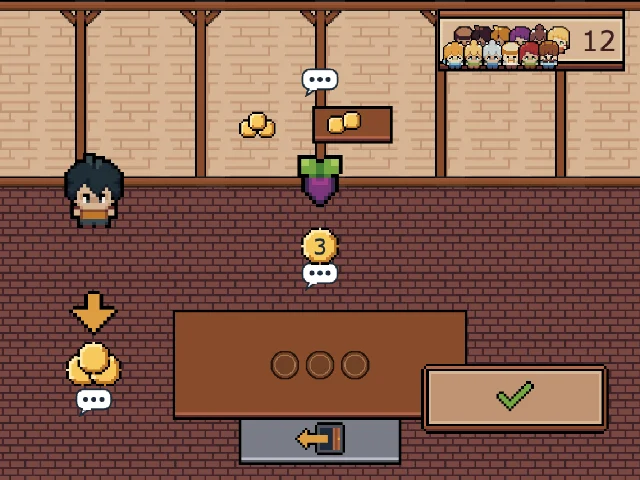
The six big ideas each have their own short lesson on the teachers page: earning, saving for a wish, needs and wants, interest, making things worth more and giving.
Three ways to use it in class
A tablet station
Two or three children at a device for ten minutes, while the rest do a printable. Each device keeps up to three children’s games, so each child continues their own game next time.
A shared screen
Show the game on the board and let one child tap while the class chooses together: “Food or the ball first?” This works well with a whole class and no devices, and the keyboard works too, so any computer can run it.
On your class page
Teachers with a class website can embed the game so children open it from the page they already use. Read the note on saves there first.
What to check before you start
- The browser. Any current browser works, on a tablet, a Chromebook or a computer. Nothing to install.
- Sound. The game speaks every goal aloud, so headphones help in a busy room. It still works with the sound off, because every goal is also shown in pictures.
- The school network. If your filter blocks new sites, ask your technology team to allow Pocketvale’s address.
- Privacy. There is no account and no chat. A child’s first name stays on the device. The site counts visits and days played with Google Analytics, without names or anything typed. The full text is the privacy policy; ask your school’s own reviewer to read it, since we make no claim about any particular law.
- Saves. The game is saved in the browser on that device and nowhere else. Clearing browsing data, private windows and school devices that reset at logout will start a child again.
What it is not
It is not a curriculum. It covers earning, saving, spending and needs and wants, which most early financial literacy lists include. The standards table shows which US, Ontario, England and Australian standards it meets, in full or in part, and which it does not. It uses plain gold coins, not any country’s money, so it practises counting and choices, not recognising real coins. Pair it with real coin activities.
Try it before class
Free to play in the browser, on an iPad, a Chromebook or a computer.
 Play Pocketvale
Questions teachers ask
Is it free for schools?
Yes. It is free to play, with no ads, and no account to set up.
Does it work on Chromebooks and iPads?
Yes. It is a browser game, so a current browser is all it needs. It works by touch and by keyboard.
How long does a child play?
Ten minutes is a good session. There are no streaks to keep and nothing is lost if a child stops.
Which grades is it for?
Kindergarten to second grade, ages four to eight. The first games count coins one at a time and get harder as a child gets better at them.
More for teachers: six money lessons, the Financial Literacy Month plan, and financial literacy for kindergarten.