 Pocketvale
Which money standards our K-2 lessons meet
We read the public money standards for young children in the United States, Ontario, England and Australia, and checked each one against our six lessons. Every row quotes the standard’s own code and words, links the document, and gives an honest answer: covered, partly, or not.
By the Pocketvale team. Checked against each document on 13 November 2026.
The short answer
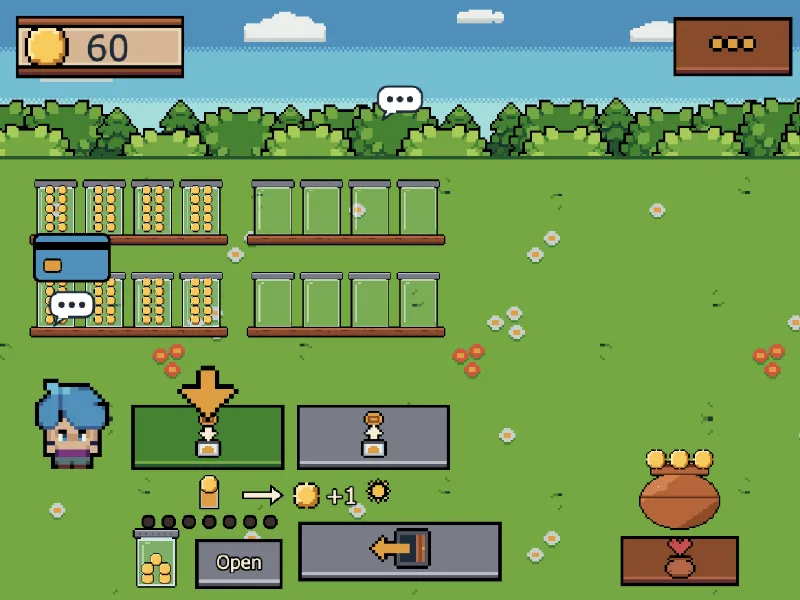
Of the 26 standards below, the lessons cover 3, cover part of 12, and do not cover 11. That is what a fifteen-minute lesson for a five-year-old should look like next to a standard written for the end of a school stage. The lessons are a first step: they give a child the picture (coins come from work, a jar fills while you wait, the bank adds a coin) that the standards build on.
Two things the lessons never do, and the standards often ask for, are real money and words. The game uses plain gold coins, not dollars or pounds, so it cannot teach a child to recognise a real coin. And it shows an idea before it names it, so a child can save for a wish long before saying “opportunity cost”. Pair the lessons with real coins and with the words your standard uses.
How to read the tables
- Covered means a lesson teaches what the standard says, in a form a child of four to eight can use.
- Partly means a lesson teaches part of it, and the last column says which part is missing.
- Not covered means no lesson teaches it. We list these rows on purpose, so you can see what to add.
The wording in each row is copied from the document the code links to, so it keeps the spelling and punctuation of that country. We left out any standard we could not read at its source, rather than quote it from memory.
US National Standards (CEE and Jump$tart)
Jump$tart and the Council for Economic Education publish one joint set of standards, so the two are one column here. It has no separate kindergarten benchmarks. Its first standards are for the end of grade 4, and the document says they outline “the cumulative result of learning that may have taken place in previous years.” Our lessons are an early step towards them, so most cells are partly met. Source: the 2021 National Standards for Personal Financial Education (PDF), from the Council for Economic Education and Jump$tart Coalition.
| Standard | What it says | Our answer | Which lesson, and why |
|---|---|---|---|
| Earning Income 4-3 | “There are different ways to be paid for labor, including wages, salaries, commissions, and tips.” | Partly | Earning. The job board shows pay for work, which is learning outcome 4-3a. It never names wages, salaries, commissions or tips. |
| Earning Income 4-1 | “People have different job choices depending on their knowledge, skills, interests, and experience.” | Not covered | The game offers many jobs, but no lesson links a job to knowledge, skills or experience. |
| Earning Income 4-4 | “People can earn income by starting a new business as an entrepreneur or by owning a business.” | Partly | Making things worth more. At the potter’s yard a child runs a tiny business: clay is bought, a pot is made and it is sold. Real entrepreneurs are not discussed. |
| Earning Income 4-5 | “People can earn income by lending money or by renting their property to others.” | Partly | Interest and the bank. Coins left with the bank earn extra coins. Renting is not in the game. |
| Earning Income 4-6 | “Income can be received as gifts or as an allowance for which no specified work may be required.” | Not covered | Every coin in the game is earned, so there is no allowance. The giving lesson is about giving, not receiving. |
| Spending 4-1 | “People differ in their preferences, priorities, and resources available for consuming goods and services.” | Partly | Needs and wants, Saving for a wish. A child with a few coins puts food before a toy, which is learning outcome 4-1c. How people differ from each other is not covered. |
| Spending 4-2 | “Money can be spent to increase one’s own or another individual’s personal satisfaction or to share the cost of goods and services.” | Partly | Giving. Coins in the giving box become a tree, a lamp or a bench that the whole village shares. Comparing people’s attitudes to spending is not covered. |
| Spending 4-3 | “When people make a decision to use money for a particular purpose, they incur an opportunity cost in that they cannot use the money for another purpose.” | Partly | Saving for a wish, Needs and wants. The shop always holds more than one purse can buy, so a coin spent now makes the wish wait. The term “opportunity cost” is never taught. |
| Spending 4-5 | “Price, spending choices of others, peer pressure, and advertising about a product or service can influence purchase decisions.” | Not covered | The game has no advertising and no peer pressure to show. |
| Spending 4-6 | “Payment methods for making purchases include cash, checks, debit cards, and credit cards.” | Not covered | The game uses coins only. |
| Saving 4-1 | “When people save money, they are choosing not to spend money today to be able to buy something in the future.” | Covered | Saving for a wish. This is the wish jar: coins kept today, one at a time, buy the wish later. |
| Saving 4-2 | “A savings plan is a plan for setting aside money to pay for a future need, goal, or emergency.” | Partly | Saving for a wish. A child sets aside coins for a goal of their own picking. Saving for an emergency is not covered. |
| Saving 4-4 | “Safety and ease of access are factors to consider when deciding where to keep savings.” | Not covered | The bank keeps coins, but no lesson compares a bank with keeping money at home. |
| Saving 4-5 | “Financial institutions often pay interest on deposit accounts to attract customers to deposit money in their institution.” | Covered | Interest and the bank. The village bank pays one more coin a week for every two full jars of five. Comparing two banks’ rates (4-5b) is not covered. |
| Credit 4-1 | “Interest is the price a borrower pays for using someone else’s money, and the income earned by the lender.” | Partly | Interest and the bank. The lesson shows the lender’s side, and the bank also lends coins that are paid back with a little extra. The borrowing side is only a question at the end. |
| Credit 4-2 | “When a person pays with credit, they have immediate use of purchased goods or services while agreeing to repay the lender in the future with interest.” | Not covered | No lesson buys anything on credit. |
Ontario Grades 1-2
In Grades 1 and 2 the Ontario strand has one overall expectation, F1: “demonstrate an understanding of the value of Canadian currency.” That is about real coins and bills. Our game uses plain gold coins, not any country’s money, so it does not meet these expectations. Pair it with real coin work. Source: the Ontario curriculum, Grade 1 strand F1, from the Ontario Ministry of Education.
| Standard | What it says | Our answer | Which lesson, and why |
|---|---|---|---|
| Grade 1, F1.1 | “identify the various Canadian coins up to 50¢ and coins and bills up to $50, and compare their values” | Not covered | The game’s coins are not Canadian coins. |
| Grade 2, F1.1 | “identify different ways of representing the same amount of money up to Canadian 200¢ using various combinations of coins, and up to $200 using various combinations of $1 and $2 coins and $5, $10, $20, $50, and $100 bills” | Not covered | The lessons count plain coins one at a time, not combinations of real coins and bills. |
England KS1 maths
The statutory requirements are not numbered, so each row names its year and its section, Measurement. Most of them are about pounds and pence, which the game does not use. Source: the mathematics programmes of study on GOV.UK, from the Department for Education.
| Standard | What it says | Our answer | Which lesson, and why |
|---|---|---|---|
| Year 1, Measurement | “recognise and know the value of different denominations of coins and notes” | Not covered | The game’s coins are not British coins or notes. |
| Year 2, Measurement | “recognise and use symbols for pounds (£) and pence (p); combine amounts to make a particular value” | Not covered | The game never shows £ or p. |
| Year 2, Measurement | “find different combinations of coins that equal the same amounts of money” | Not covered | The lessons count plain coins of one kind. |
| Year 2, Measurement | “solve simple problems in a practical context involving addition and subtraction of money of the same unit, including giving change” | Partly | Making things worth more, Saving for a wish. A child counts how many coins a pot made over its clay, and how many more the jar needs. Giving change is not in the lessons. |
Australian Curriculum v9 F-2
ACARA maps where money learning sits in Version 9.0 in its own consumer and financial literacy tables. From Foundation to Year 2 it sits in Mathematics, Number, as counting and money problems. None of those content descriptions is about needs and wants, saving or giving, so those three lessons have no row here. Source: ACARA’s consumer and financial literacy curriculum connection, from the Australian Curriculum, Assessment and Reporting Authority (ACARA).
| Standard | What it says | Our answer | Which lesson, and why |
|---|---|---|---|
| AC9MFN05 | “represent practical situations involving addition, subtraction and quantification with physical and virtual materials and use counting or subitising strategies” | Covered | Saving for a wish, Making things worth more. The game’s coins are virtual materials counted one at a time, in a jar that fills and a sale that pays more than its cost. |
| AC9MFN06 | “represent practical situations involving equal sharing and grouping with physical and virtual materials and use counting or subitising strategies” | Partly | Interest and the bank. The bank groups coins in jars of five. Equal sharing is not covered. |
| AC9M1N05 | “use mathematical modelling to solve practical problems involving additive situations, including simple money transactions; represent the situations with diagrams, physical and virtual materials, and use calculation strategies to solve the problem” | Partly | Making things worth more, Needs and wants. Buying clay, selling a pot and choosing food or a ball are simple money transactions in coins. Prices are not in dollars. |
| AC9M2N06 | “use mathematical modelling to solve practical problems involving additive and multiplicative situations, including money transactions; represent situations and choose calculation strategies; interpret and communicate solutions in terms of the situation” | Partly | Interest and the bank, Giving. Two full jars of five make one more coin, and five coins make one gift. The game does the sums in pictures, not in dollars. |
England KS1 PSHE
The programme itself is downloaded through a sign-up form, so we could not read its wording to quote it here. We make no claim against it. Its money learning sits in the economic wellbeing theme; check that theme against the six lessons yourself. Source: the PSHE Association’s programme of study page.
Lesson by lesson
- Earning: US National Standards (CEE and Jump$tart), Earning Income 4-3 (partly). Ontario Grades 1-2, none. England KS1 maths, none. Australian Curriculum v9 F-2, none.
- Saving for a wish: US National Standards (CEE and Jump$tart), Spending 4-1 (partly); Spending 4-3 (partly); Saving 4-1; Saving 4-2 (partly). Ontario Grades 1-2, none. England KS1 maths, Year 2, Measurement (partly). Australian Curriculum v9 F-2, AC9MFN05.
- Needs and wants: US National Standards (CEE and Jump$tart), Spending 4-1 (partly); Spending 4-3 (partly). Ontario Grades 1-2, none. England KS1 maths, none. Australian Curriculum v9 F-2, AC9M1N05 (partly).
- Interest and the bank: US National Standards (CEE and Jump$tart), Earning Income 4-5 (partly); Saving 4-5; Credit 4-1 (partly). Ontario Grades 1-2, none. England KS1 maths, none. Australian Curriculum v9 F-2, AC9MFN06 (partly); AC9M2N06 (partly).
- Making things worth more: US National Standards (CEE and Jump$tart), Earning Income 4-4 (partly). Ontario Grades 1-2, none. England KS1 maths, Year 2, Measurement (partly). Australian Curriculum v9 F-2, AC9MFN05; AC9M1N05 (partly).
- Giving: US National Standards (CEE and Jump$tart), Spending 4-2 (partly). Ontario Grades 1-2, none. England KS1 maths, none. Australian Curriculum v9 F-2, AC9M2N06 (partly).
See what the lessons teach
Ten minutes in the game shows you each screen the tables name. Free to play in the browser.
 Play Pocketvale
Questions teachers ask
Why do so few rows say covered?
Most money standards describe what a child knows at the end of a school stage, often at nine or ten. A short lesson for a child of five can start an idea but rarely finishes one, so “partly” is the honest answer for most rows.
Is this the same as being approved by these bodies?
No. None of these bodies has reviewed the lessons. This is our own reading of their public documents, with the wording quoted so you can check it.
My standard is not here. What should I do?
Use the six lessons’ “idea” sentences on the teachers page and match them to your own list. Most early lists cover earning, spending, saving and sharing, which the lessons teach.
Why are there no PSHE rows?
The PSHE Association shares its programme of study through a sign-up form, so we could not read its wording to quote it. Rather than guess, we left it out.
More for teachers: all six lessons, the Financial Literacy Month plan and financial literacy games for K-2.