 Pocketvale
Money lesson for kindergarten: saving for a wish
Saving is the hardest money idea for a five-year-old, because it asks a child to give up something now for something bigger later. A wish picked by the child, and a jar in plain sight, make it possible.
By the Pocketvale team. Published 2 November 2026. For ages 4 to 8. About fifteen minutes: five of talk and ten of play.
The idea: Saving means keeping coins today so we can buy something bigger later.
What a child says back: “I am saving for it, and the jar is nearly full.”
Five minutes of talk
- Ask: “What is something you really want that costs more than you have today?” Take a few answers. Keep the wishes small and real.
- Draw a jar on the board and a picture of one wish on its front. Draw a line where “enough” is.
- Add three coins to the jar, one at a time, counting out loud. Ask: “Is it full yet? How many more?” Use pictures, not numerals, if your group is younger.
- Ask: “What if we spend one of these on a sticker today?” Let them say what happens: the wish takes longer.
- Say it back together: “I am saving for it.” Then go and play.
The game screen that shows it
The wish jar is at the heart of the game. A child picks a wish, such as a painting or a sofa for the pet’s home. Coins go into the jar one at a time and the jar fills up in plain sight. When it is full, the wish can be bought, and it stays in the home for good. The shop always holds more than one purse can buy, so every coin is a choice between now and later.
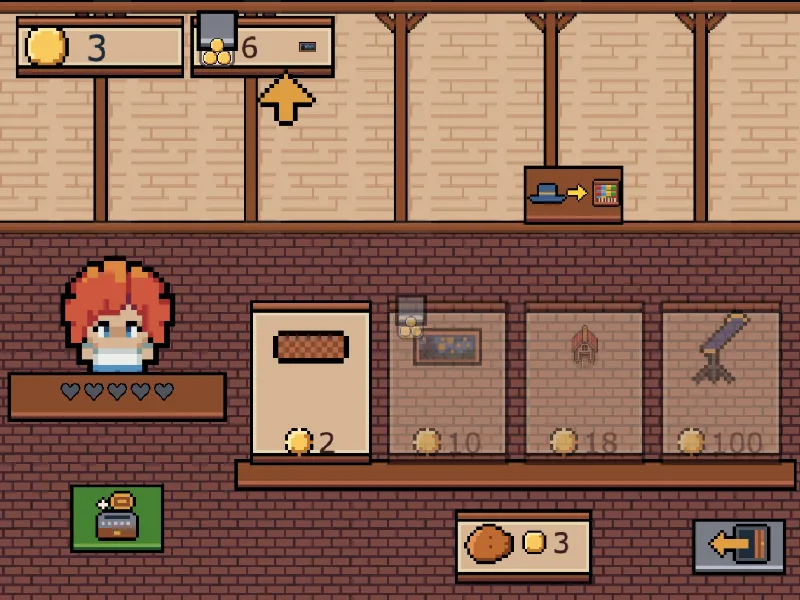
What a child does there, in about ten minutes:
- A child opens the shop and taps a wish to save for.
- Coins are earned at a job, some go in the jar, and the jar fills in plain sight.
- When the jar is full the wish is bought, and it appears in the pet’s home.
Pocketvale is a free browser game for children of about 4 to 8. It needs no account, shows no ads and plays on a tablet, a Chromebook or a computer. A child can play it on one device, or you can add it to your class page.
Print it
A savings tracker lets each child colour in a coin for every coin saved, and a wish list lets each child draw what is being saved for. Print the savings tracker and the wish list, free and ready to use.
What to listen for
- A child who names the wish and says how close the jar is.
- A child who puts a coin back in the jar instead of spending it.
- A child who says “wait”, which is the idea in one word.
Standards this lesson meets
Read off each standard’s own document on 13 November 2026. Most early money standards go further than one fifteen-minute lesson, so most of these are met in part.
- US National Standards (CEE and Jump$tart), Spending 4-1 (covers part of it): “People differ in their preferences, priorities, and resources available for consuming goods and services.”
- US National Standards (CEE and Jump$tart), Spending 4-3 (covers part of it): “When people make a decision to use money for a particular purpose, they incur an opportunity cost in that they cannot use the money for another purpose.”
- US National Standards (CEE and Jump$tart), Saving 4-1 (covers it): “When people save money, they are choosing not to spend money today to be able to buy something in the future.”
- US National Standards (CEE and Jump$tart), Saving 4-2 (covers part of it): “A savings plan is a plan for setting aside money to pay for a future need, goal, or emergency.”
- England KS1 maths, Year 2, Measurement (covers part of it): “solve simple problems in a practical context involving addition and subtraction of money of the same unit, including giving change”
- Australian Curriculum v9 F-2, AC9MFN05 (covers it): “represent practical situations involving addition, subtraction and quantification with physical and virtual materials and use counting or subitising strategies”
The standards table has every row, including the ones no lesson meets, with links to the documents.
Read more for grown-ups
The article that covers this idea for parents and teachers is Teaching kids to save for a goal. You can send it home with the lesson.
Try this lesson’s screen yourself
Free to play in the browser, on an iPad, a Chromebook or a computer.
 Play Pocketvale
Questions teachers ask
How long should a young child save for something?
Start with a goal that can be reached in a few days. In the game a first wish can be reached in one or two sessions. Make the next goal a little longer once one has been bought.
What if a child wants to spend the savings?
Ask whether the wish is still wanted and what happens to it after a spend. The choice is the child’s own. After a spend, the goal simply takes longer, and that is remembered.
Before this: earning. Next: needs and wants. All six lessons are on the teachers page, and a week of them is the Financial Literacy Month plan.