
Selling at a stall: a first lesson in earning
A stall shows a young child that money is earned by giving someone something they want. Let them lay out goods, name a price, count coins in and count change back. Counting change is the hard part, and the best part to practise.

By the Pocketvale team. Published 13 November 2026, updated 14 November 2026.
Key takeaways
- A stall shows a child that money is earned by giving someone what they want.
- Three kinds of customer teach three skills: paying, choosing and giving change.
- Counting change is the hard part, and the best part to practise.
Why a stall teaches more than a worksheet
On a stall, the money is on the other side of the table. A child who has only ever spent learns what the person behind the counter was doing all along: someone wanted a thing, and paid for it. That is the first honest answer to "where does money come from", and it comes from a child's own hands.
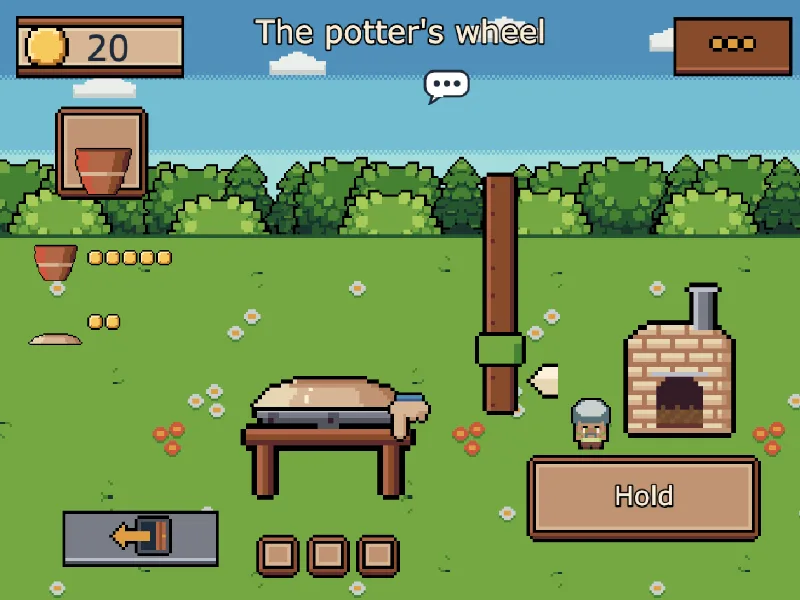
A stall also packs a lot of small maths into something that feels like play. A customer comes, a price is said, coins are counted, and sometimes a coin that is too big needs change. A child who has run a stall for a few minutes has done more adding and taking away than most worksheets ask for, and has been the one in charge.
 Lay out the goods
 The customer pays
 The customer chooses
 Give change back
Three kinds of customer, three skills
Not every sale is the same, and a stall is better when it is not. Three kinds of customer make a good ladder for a young child.
1. The customer who pays
The customer wants one thing, and the child says the price. The customer puts coins on the table and the child counts them. This needs no reading, and it is the right place to start, with prices of one to five coins.
2. The customer who chooses
The customer has only enough for one of two things. "I can only have one. Which can I have?" The child compares the two prices and picks the one the customer can afford. This is scarcity, and it is a surprisingly different idea from adding. Comparing two small numbers is easier than adding them, so it can come early.
3. The customer who needs change
The customer pays with one coin that is worth more than the bill, and the child gives back the difference. The way to do it is to count on from the price up to the coin, not to subtract. If something costs three and the customer gives five, say "three, four, five" and hand over two coins. It is the hardest of the three, so it waits until the first two are easy.
What to say to your child
Try: "Someone gave you coins because you gave them something they wanted." That is the whole idea of earning, in one sentence a five-year-old can repeat. Then ask about the price: "How did you decide what it costs?" The answers are often surprising, and they are the start of a talk about why prices differ. Our guide to sales and the best price picks that up.
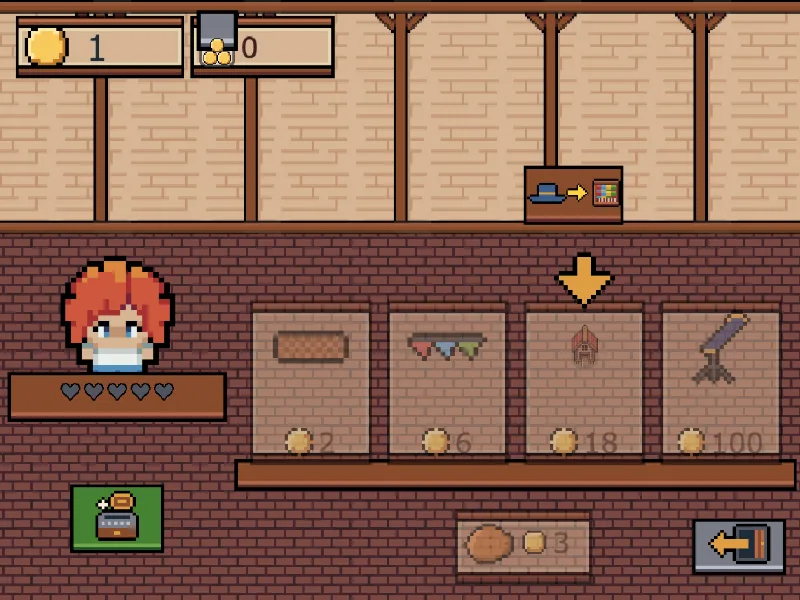
One thing to do away from the screen
Open a shop on the kitchen table. Lay out six or so small things with price tags of one to five coins. Take turns being shopkeeper and customer. As the customer, pay with exact coins at first, then with a coin that is too big, so your child has to count change. Once that is easy, say "I can only afford one of these two" and let them tell you which. Ten minutes is plenty. A lemonade stand outside is the real-world version, if you have the weather.
A stall in Pocketvale
Pocketvale is a free browser game for children of about 4 to 8, and its market stall is built on exactly these three customers. A child lays out goods, a customer arrives, and the child taps each coin to count it onto the stall. Most customers simply pay. Some can afford only one of two things, and the child has to tap the one they can have, then count out its price. Others put down one big coin, and the child counts the change back. Change comes in only at the next rung of the ladder, once paying and choosing are easy.
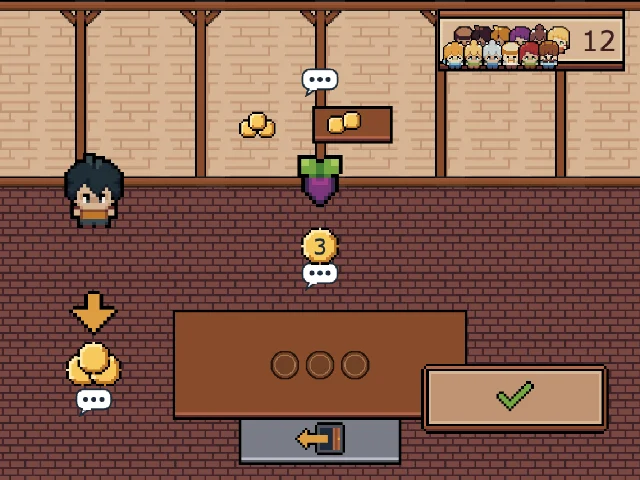
The game does not stay the same once a child has it. At the top of the ladder the shift changes from day to day, so tomorrow's stall is a different one, and there is no mark out of ten. Below the top, a named regular drops in now and then with one small order. The stall is also one of the places coins are earned, so what is counted on the stall goes into the child's purse and can be saved, spent or given.
Sources and further reading
What this guide leans on, from outside Pocketvale.
- Money as You Grow: school-age children (US Consumer Financial Protection Bureau). The same guide for school-age children and preteens.
- Council for Economic Education. A US nonprofit that publishes economics and personal finance standards for schools.
How we wrote this
- We lean on official guidance. It is linked under Sources, and named in the text.
- Every picture of the game is a screenshot from the game itself.
- We make Pocketvale, so the sections about the game carry its name.
- Each page shows the day it was last changed.
- We are not financial advisers, and every family is different.
Who writes these guides
Pocketvale is made by a parent and software engineer, as a family project. We write these guides to share what building a money game for children aged 4 to 8 taught us.
Spotted a mistake? Tell us through the contact form. More about Pocketvale.
Run a market stall in the game
Free to play in the browser, on an iPad, a tablet or a computer. No ads, no sign-up.
 Play Pocketvale
Questions parents ask
What age is a child ready to run a stall?
Around four or five for paying with exact coins up to five, and around six for change. Start with the simplest kind of customer and add the next only when the first is easy.
Why count change on from the price?
Counting up from the price to the coin is how change is really made, and it needs only counting, not taking away. Children who find subtraction hard can usually manage "three, four, five".
Do we need real coins?
Real coins are best, because the weight and the size help. If you have none to spare, buttons or paper coins work, as long as each one stands for the same amount.
Does the game stall use real money?
No. The coins are game coins, and nothing is charged. The stall is there to practise counting and change.
More guides: money games for kids, where money comes from, sales and the best price, needs and wants and all our guides for parents.