
How to teach kids about borrowing and paying back
Borrowing means having something now and giving back more later. For a young child, the lesson is that the extra is the price of not waiting. Let them borrow a small amount, count out what they owe, and pay it back themselves.

By the Pocketvale team. Published 13 November 2026, updated 14 November 2026.
Key takeaways
- Borrowing means having something now and giving back more later.
- The extra is the price of not waiting, so say it before the loan.
- Keep a first loan small, and let your child pay it back themselves.
Why borrowing belongs in a young child's money lessons
Most adults borrow, and most children will. A child who has only ever heard that "you can put it on the card" learns that borrowing is free, because nothing visible ever changes hands. The sooner a child sees that borrowing has a price, the better the idea sticks.
You do not need a bank, a rate or a percentage. A five-year-old can understand "I had it today, and I gave back a little more next week", because they can count the extra coin. The goal is not to make borrowing sound frightening. It is to make it sound like what it is: a trade, where the price of having something sooner is a little more to pay back.
 A small, real loan
 Say the price first
 Show the other way
 Pay it back
Four steps to a first loan at home
1. Keep it small and make it real
A first loan should be a few coins, and it should be for something the child can use today. A loan for a treat they will have forgotten by next week teaches little. A loan to close the last small gap on something they have been saving towards is one they can feel.
2. Say the price before the loan, not after
"You can have these three coins today. On Saturday you give me four back." Say it, show it, and let the child agree. The extra coin should be easy to see, so use a simple, round rule such as one extra coin for every five borrowed. It is far more than a real lender charges, and that is the point: a child will notice it.
3. Show the other way to get there
Put the same thing next to it: "Or you can wait two weeks, and pay nothing extra." Waiting costs time and borrowing costs coins, and the child chooses which they would rather spend. This is the honest comparison, and it is the one most grown-ups skip.
4. Let them pay it back themselves
On the day, the child counts out what they owe and puts it in your hand. Do not forgive it, and do not hurry it. If paying it back leaves them with less to spend that week, that is the lesson, and it is a small one.
Rules that keep it kind
- Only one loan at a time. A child who owes should not be offered a second.
- Never take what they own. If a debt goes wrong, the answer is more waiting, not taking a toy or a savings jar. A young child should never feel that borrowing puts their belongings at risk.
- Pay back a share as they earn. If a child earns pocket money while they owe, take a fixed share of each payment, such as one coin in four, so the debt shrinks as they earn.
- Do not shame it. Borrowing is not wrong. A good question afterwards is "Was it worth it?"
What to say to your child
One sentence is enough: "If you want it today, it costs a little more. If you wait, it costs nothing extra." Say it when the question comes up, not as a lecture. Then ask which they would choose, and let them choose, even if you would choose differently. Our guide to explaining interest to a child covers the saving side of the same idea.
One thing to do away from the screen
Run a family bank for a week. Give your child a small purse of coins and a goal a few coins beyond it. Offer a loan of three coins to close the gap today, with four to pay back on Saturday. Write the loan on a card on the fridge: what was borrowed, what is owed, and a box to tick when it is paid. At the end of the week, ask what they would do next time.
Borrowing in Pocketvale
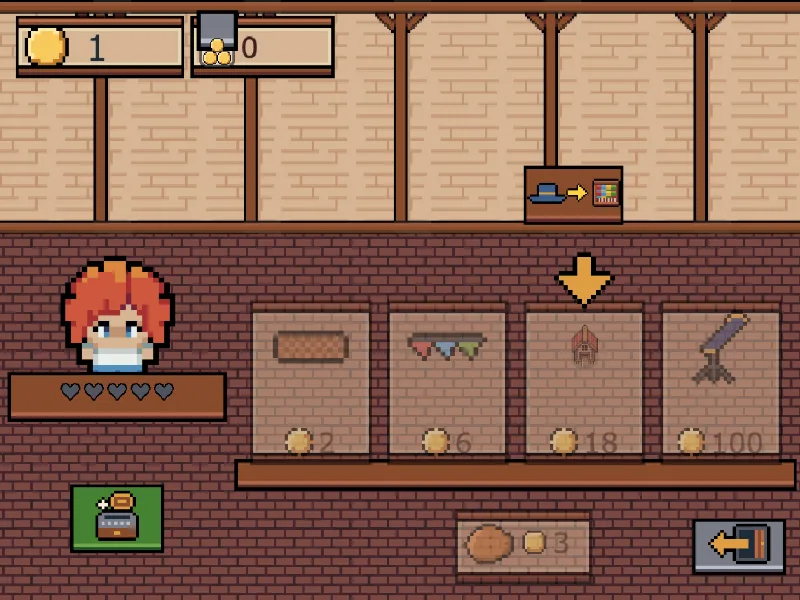
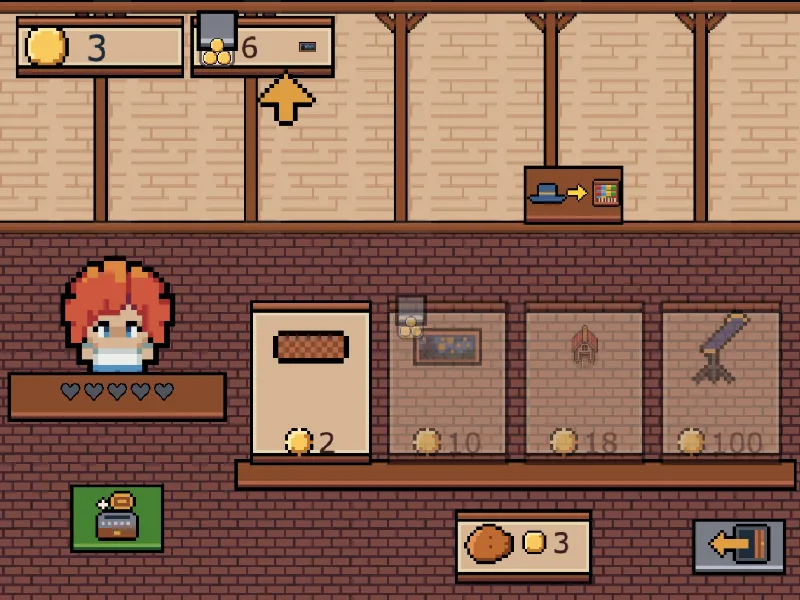
Pocketvale is a free browser game for children of about 4 to 8, and the village bank lends coins. A child picks one of three loan pads, small, middle or large, and the bank says what it costs before anything moves. Whichever pad is chosen, the child owes a fifth more than they borrowed. The sizes grow with what the child earns in a typical day, so a loan is always a real decision rather than a rounding error. The biggest is about half a day's pay.
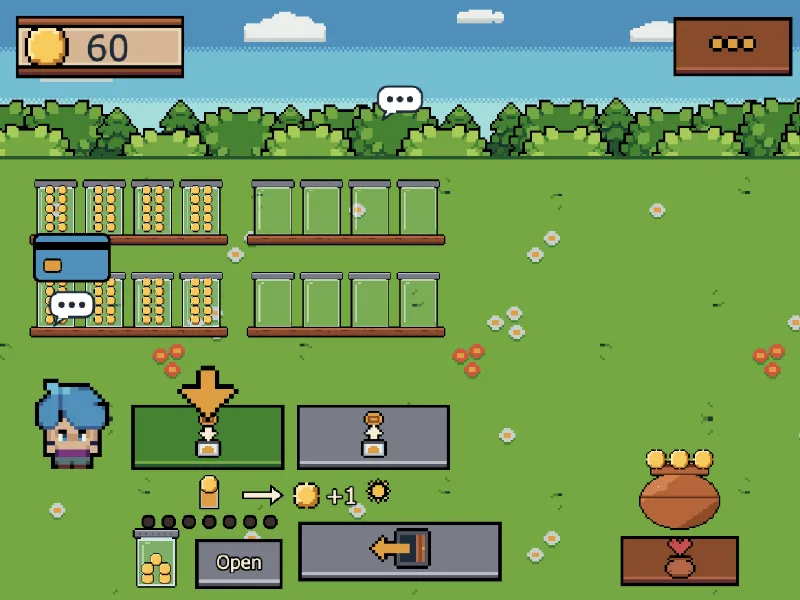
The first tap on a pad is a comparison, not a loan. It says what borrowing costs, the extra coins, and what waiting costs instead, in days of the child's own pay and nothing extra. Only the second tap borrows. While the child owes, the bank keeps one coin of every four they earn until the debt is cleared. It never touches a jar, a shelf or anything the child has bought. The board afterwards remembers the loan: what was borrowed and what was paid back.
There is one place where a loan can be worth its price. A travelling pedlar visits the village for a single day with a rare item that comes round again only after weeks. If a child already has at least half the price and would lose the chance by waiting, the bank offers a loan sized to close the gap, and the pedlar's card says how many weeks the wait would be. The choices are the same two: pay more and have it today, or wait and pay nothing extra.
Questions to ask afterwards
- Was it worth the extra coins?
- Would you have got there anyway by waiting? How long would that have taken?
- What would you do differently next time?
Sources and further reading
What this guide leans on, from outside Pocketvale.
- Money as You Grow: school-age children (US Consumer Financial Protection Bureau). The same guide for school-age children and preteens.
- Jump$tart Coalition for Personal Financial Literacy. A US coalition that publishes standards for personal financial education.
How we wrote this
- We lean on official guidance. It is linked under Sources, and named in the text.
- Every picture of the game is a screenshot from the game itself.
- We make Pocketvale, so the sections about the game carry its name.
- Each page shows the day it was last changed.
- We are not financial advisers, and every family is different.
Who writes these guides
Pocketvale is made by a parent and software engineer, as a family project. We write these guides to share what building a money game for children aged 4 to 8 taught us.
Spotted a mistake? Tell us through the contact form. More about Pocketvale.
Borrow and pay back in a game
Free to play in the browser, on an iPad, a tablet or a computer. No ads, no sign-up.
 Play Pocketvale
Questions parents ask
At what age can a child understand borrowing?
Around five, if the loan is a few coins they can count and the extra is one visible coin. Younger children can see that "I give back more", but they need a grown-up to carry the sums.
Should I charge my child extra when they borrow from me?
For a short family lesson, yes, a small visible extra helps the idea stick. Keep it as a game with clear rules, make the loan small, and never take anything they own if it goes wrong.
Is it wrong to let a child borrow?
No. A small loan, with the price said first and a way to pay it back, teaches something real. What matters is that the child sees the cost and chooses.
Does the game charge real money?
No. The coins in the game are pretend, and there is nothing to pay. The bank only lends game coins, to show how borrowing works.
More guides: explaining interest to a child, teaching kids to save, delayed gratification for kids, where money comes from and all our guides for parents.