
How to explain interest to a young child
Interest is one of the most powerful ideas in money, and one of the hardest to explain with words. With coins on a table, though, even a five- or six-year-old can see it: save, and a little extra appears; borrow, and you give a little extra back.

By the Pocketvale team. Published 29 October 2026, updated 14 November 2026.
Key takeaways
- Interest in one sentence: save, and a little extra appears; borrow, and you give a little back.
- Coins on a table show it better than words.
- Show the saving side first, then the borrowing side.
Interest in one sentence
Here is a version a young child can hold on to: "If you leave your money in the bank, the bank gives you a little extra. If you borrow money, you give back a little extra."
That is it. Percentages, rates and compound interest can all wait. What matters first is the picture: the extra coin that nobody earned, arriving because the money waited.
 Save coins
 A little extra appears
 Borrow and owe extra
 Pay it back
Is your child ready?
Interest builds on two earlier ideas, so check these first:

- Counting coins. A child needs to see that six is more than five, without a grown-up saying so.
- Keeping money. They need to understand that coins in a jar are still theirs, even when they are not holding them. Our guide to saving for a goal is the place to start if this is new.
Most children can grasp the extra-coin idea at five to seven. Percentages and "interest on interest" make more sense from about eight, once multiplication is under way.
Show the saving side with coins
Play "family bank". Your child gives you some of their coins to look after. At the end of the week, you give them all back, plus one extra coin. Put the coins in a row so they can see the row has grown.
- Use whole coins. The extra must be something they can hold, not a fraction.
- Make the extra big enough to notice. A family bank can be far more generous than a real one. Say so honestly: "Real banks give much less than this, but the idea is the same."
- Reward filling, not just keeping. For example, one extra coin for every five kept. It shows that more saved means more extra.
- Say the word. Once they have seen it, name it: "That extra coin is called interest."
Show the borrowing side too
Interest works both ways, and the borrowing side is the more important lesson for later life. Next time your child wants something before they have enough, offer a small loan: "I can lend you five coins now, but you give me back six." Lay out the five you lend, then the six they give back, side by side. The longer row is the cost of not waiting.
Keep loans small and short, and let your child decide. Some will happily pay the extra coin to have the thing today, and that is a real, useful choice. The point is that they see the price of borrowing before they pay it. Our guide to delayed gratification explains why waiting is such a big part of this.
Words that help
- Save: keep money instead of spending it.
- Bank: a safe place that looks after money.
- Interest: the little extra you get for saving, or pay for borrowing.
- Borrow: use someone else's money now and give it back later.
Interest in Pocketvale
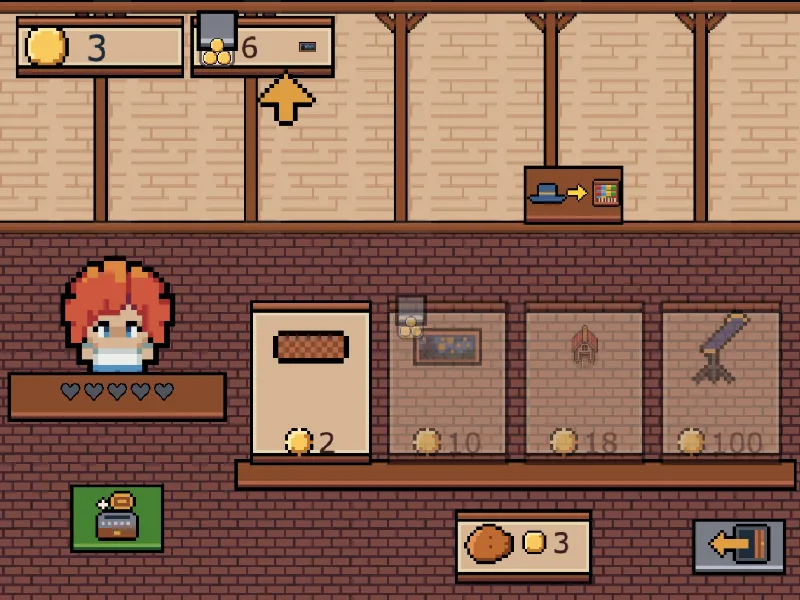
Pocketvale is a free browser game for children of about 4 to 8, and its village bank is built on exactly this picture. There are no balances or numbers to read. Coins go on a shelf in glass jars of five, and two full jars make one more coin each week. A part-full jar makes nothing, so the first thing a child learns about interest is that it rewards filling the jar.
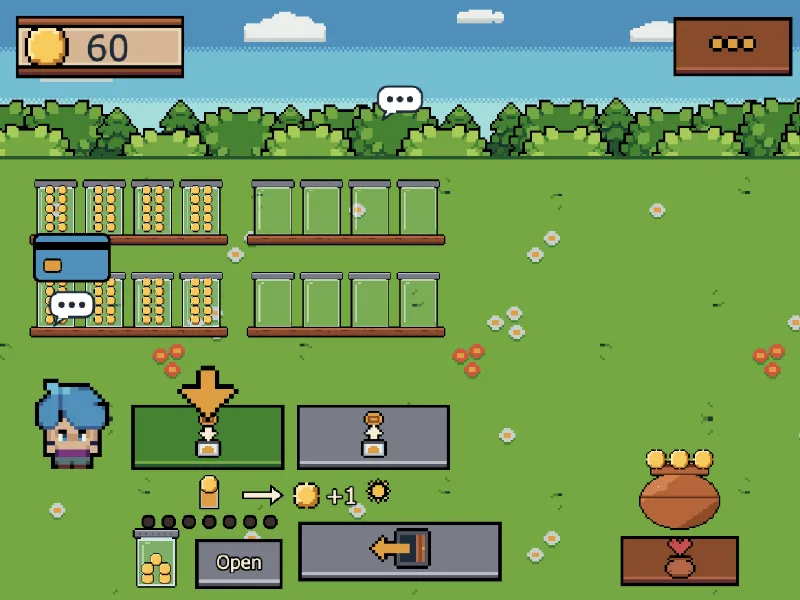
The bank also lends. A child can borrow five, ten or twenty coins and gives back one extra coin for every five, paid back a coin at a time while they play. If they already have enough coins, the bank says so before they borrow. The word "interest" is only ever said next to the extra coins a child can see.
Sources and further reading
What this guide leans on, from outside Pocketvale.
- Money as You Grow: school-age children (US Consumer Financial Protection Bureau). The same guide for school-age children and preteens.
- Council for Economic Education. A US nonprofit that publishes economics and personal finance standards for schools.
How we wrote this
- We lean on official guidance. It is linked under Sources, and named in the text.
- Every picture of the game is a screenshot from the game itself.
- We make Pocketvale, so the sections about the game carry its name.
- Each page shows the day it was last changed.
- We are not financial advisers, and every family is different.
Who writes these guides
Pocketvale is made by a parent and software engineer, as a family project. We write these guides to share what building a money game for children aged 4 to 8 taught us.
Spotted a mistake? Tell us through the contact form. More about Pocketvale.
Visit the village bank
Free to play in the browser, on an iPad, a tablet or a computer.
 Play Pocketvale
Questions parents ask
At what age can a child understand interest?
Most children can understand the simple idea, an extra coin for saving, at about five to seven, if they can see the coins. Percentages and compound interest usually make sense from about eight or nine.
How do I explain compound interest to a child?
Wait until simple interest is clear. Then show that the extra coins, left in the jar, start earning extra coins too. A few weeks of a family bank that pays on the whole jar makes the point.
Should I explain borrowing as well as saving?
Yes. Borrowing is the side of interest that costs money, and seeing that you give back more than you got is one of the most useful money lessons a child can have.
More guides: saving for a goal, delayed gratification for kids, and all our guides for parents.