 Pocketvale
Chore chart with money: a free printable
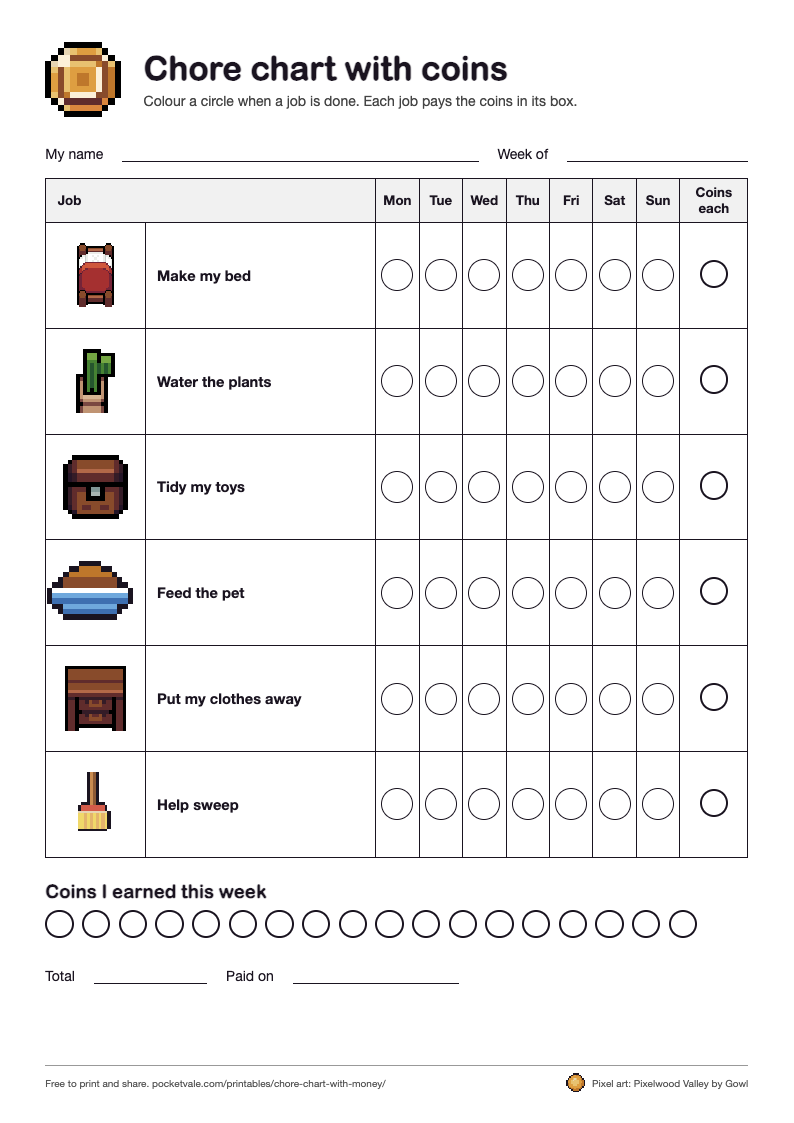
A weekly chart with picture jobs, a circle for every day, and a place to write what each job pays. A second page is an allowance chart with spend, save and give jars. Use the money side or leave it out, whichever suits your family.
By the Pocketvale team. Published 2 November 2026.
Download the PDF
2 pages, black line on white paper, so it uses very little ink. The week starts on Monday on the A4 sheet and on Sunday on the US Letter one.
Free to print and share at home or in class. No sign-up, no email, no ads.
What is on the two pages
Page one, "Chore chart with coins". Six jobs, each with a picture so a child who cannot read yet knows what it is: make my bed, water the plants, tidy my toys, feed the pet, put my clothes away, help sweep. A row of circles for the seven days, a "coins each" circle where you write what the job pays, and eighteen coins at the foot to colour in as the week's money is earned.
Page two, an allowance chart. A table to agree the coins each job pays, then three jars headed Spend, Save and Give to colour in, each with a line to write how many coins go in. It turns the week's pay into a plan.
How to use it
- Choose the jobs together. Cross out any you do not want and write your own on the spare lines. Pick jobs your child can really do, which the chore charts by age will help with.
- Agree the pay first. Write the coins each job pays in the "coins each" circle before the week starts, so nobody argues about it on Friday.
- Colour a circle for each job done. Do it together, straight after the job, while it is fresh.
- Count the week. On payday, count the circles and the coins they earn, colour that many coins at the foot, and pay out.
- Split it into three jars. Page two shows how. A common start is some to spend now, some to save for a goal, and a little to give.
Should a chore chart have money on it?
Families differ, and there is no single right answer. Some pay only for extra jobs and keep everyday help, such as making the bed, unpaid. Others pay for a small list of jobs, and others keep pocket money and chores completely apart. The chart works in every case. Use the "coins each" column for the paid jobs, and leave it blank for the jobs that are simply part of living in the house.
Our guide to age-appropriate chores sets out both sides of paying for chores, and the guide to pocket money for young children explains how to set up a regular amount. Whatever you choose, tell your child the rule before they start, and keep to it.
The allowance chart
Whether you call it pocket money or an allowance, young children understand it best when they can see it. The chart on page two has a place to list each job and what it pays, and then three jars. Colouring the jars and writing how many coins go in each is a short, concrete lesson in splitting money between now, later and others. For more on the three-jar idea, see teaching kids to save for a goal.
Earning coins at jobs in Pocketvale
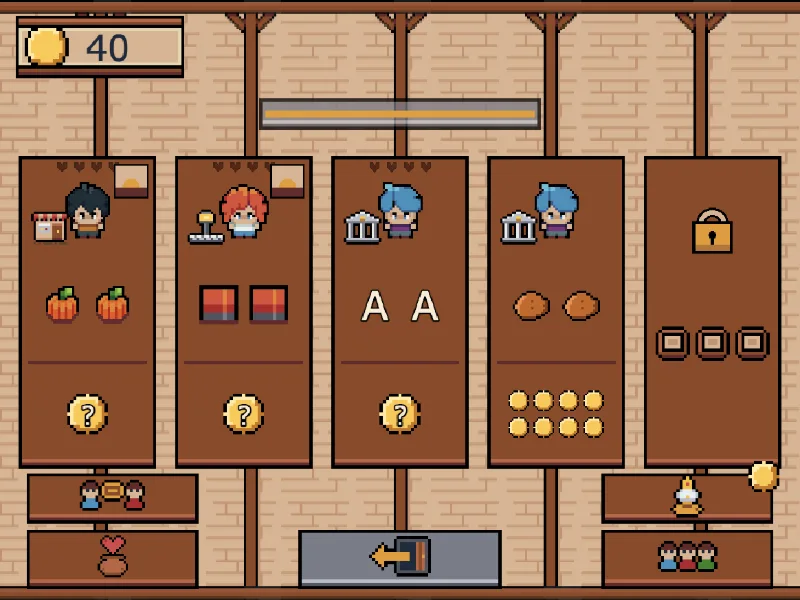
The game has its own chore chart: a job board in the village where small jobs pay coins. A child picks a job, does it, and gets paid, then chooses whether to spend or save what they earned. It is a gentle way to practise the same idea on a screen, and a fun partner to the paper chart.
Earn coins at jobs in the game
Free to play in the browser, on an iPad, a tablet or a computer. No ads, no sign-up.
 Play Pocketvale
Questions parents ask
What jobs are on the chart?
Six picture jobs: make my bed, water the plants, tidy my toys, feed the pet, put my clothes away and help sweep. You can cross any out and write your own on the spare lines.
How much should each job pay?
It is a family decision. Many families pick a small number of coins, such as one or two for a job, so a young child can count what they earn. Write the amount before the week starts and keep it the same.
Does my child have to be able to read?
No. Every job has a picture, and the days of the week are short words that a child quickly learns by position. A grown-up can read the jobs aloud each morning.
Can I use it without any money?
Yes. Leave the "coins each" circles empty and use the chart as a plain picture chore chart, or colour the coins at the foot as stars.
More printables: chore charts by age, a savings tracker and all our free printables. Related guides: age-appropriate chores and pocket money for young children.