
How to teach kids about giving: spend, save, give
Young children learn to give best when giving is their own choice and they can see what it did. Use three jars, spend, save and give, let them pick where the gift goes, and ask how it felt. Never take it back or make it a bargain.

By the Pocketvale team. Published 13 November 2026, updated 14 November 2026.
Key takeaways
- Children learn to give best when it is their own choice.
- Use three jars, spend, save and give, and let your child pick where the gift goes.
- Never take a gift back or make it a bargain, and ask how it felt, once.
Why giving comes with the other two jars
Most money lessons for young children are about getting: earning, saving, buying. Each ends with the child owning something. Giving is the lesson that money can also do something for someone else, and a child who has never given has only half the picture.
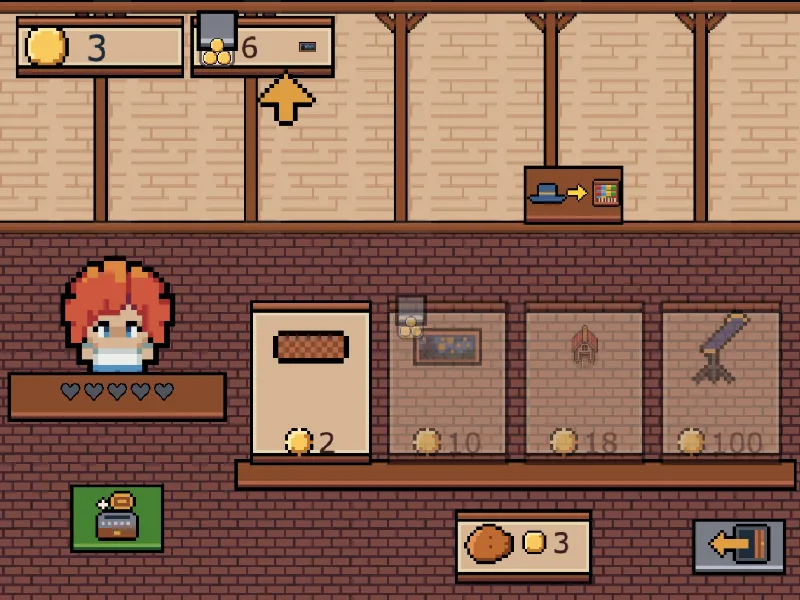
It works best as the third of three jars. As coins arrive, a child splits them between spend, for now, save, for something bigger later, and give, for others. The jars make the choice concrete, and the give jar stops giving from being a one-off act of guilt or generosity. It becomes a habit with a place of its own. Our guide to saving for a goal covers the save jar in more detail, and our free spend, save, give jars printable gives you the three jars to colour in.
 The child chooses
 A small, real jar
 See the result
 Ask how it felt
Five ways to make giving real
1. Let the child choose
A gift a child was told to give is a chore. A gift they chose is the real thing, even when it is small and the cause is odd. If the child wants the give jar to go to the stray cat next door, let it.
2. Keep the gift small and the jar real
The amount does not matter. What matters is the coin leaving the child's hand. A jar that fills slowly and is emptied on a day the child picks makes a better lesson than a large gift once a year.
3. Make the result visible
"I gave some money to a charity" is invisible to a five-year-old. "Our coins bought a bag of food for the food bank, and here it is" is not. Give to something a child can see or visit: a tree, a bench, a shelf of tins at the supermarket drop-off, a neighbour's bird feeder.
4. Never make it a trade
Do not match the gift, pay for it, or reward it with a treat. A gift that pays is a purchase, and children spot that faster than adults expect. The reward is the thing itself. Praise the choice, not the amount: "You thought about someone else."
5. Ask how it felt, once
After a gift, ask one question and leave it: "How did that feel?" Do not push for the answer you want. Some children say it feels good, some say it feels strange to have less, and both are honest.
What to say to your child
Try: "Some of your coins are for you, some are for later, and some are for other people." It tells a child that all three belong, and that giving is a normal part of having money, not a reaction to someone looking sad. Then ask where the give jar could go this week.
One thing to do away from the screen
Pick a gift together, from the give jar. Once a month, empty the give jar on the table, count it, and choose where it goes: a food bank collection, a bird feeder for the garden, a book for a classroom shelf. Let your child hand it over, or put it in the bag. Take a photo of the gift standing in its place, and stick it to the jar. The next gift will be easier.
Giving in Pocketvale
Pocketvale is a free browser game for children of about 4 to 8, and giving is one of its three jars. A child can give at three places in the village, and every one is the child's choice.
- The giving box. Five coins plants a tree or puts up a bench in a bare corner of the village, and everyone walks past it. Nothing comes back in coins, ever, because a gift that pays is a purchase. What comes back is the thing itself, standing there.
- The village chest. Coins pooled with the villagers pay for what the village needs, and the villagers give beside the child.
- The village fund. A lamp, then a well, then a reading tent, each dearer than the last. The child picks the size of each gift, and the bigger ones open only once the child's purse is large enough that the gift is a small part of it.
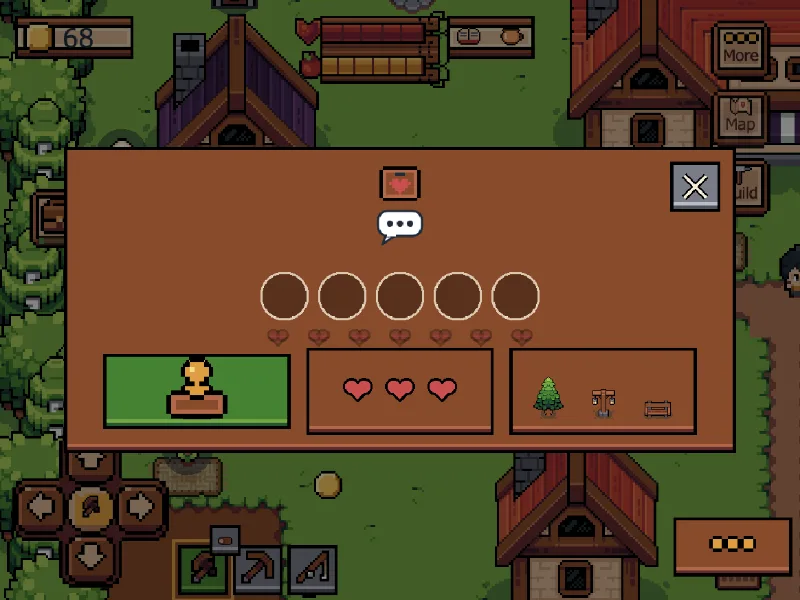
Nobody forces it. When a child's purse is full, a neighbour mentions what the village is saving for, about once a week, and a button says "Show me". It shows where, says giving is the child's choice, and points the way. Nothing moves until the child gives at the chest or the sign. The game never takes a coin the child has not decided to give.
A printable for it
Our free spend, save, give jars sheet has three jars to colour in, lines to say where each jar's coins will go, a log of a week of coins and a box to draw the gift. It prints on A4 or US Letter paper.
Sources and further reading
What this guide leans on, from outside Pocketvale.
- Money as You Grow: young children (US Consumer Financial Protection Bureau). A US government guide for parents, with money ideas for young children.
- Council for Economic Education. A US nonprofit that publishes economics and personal finance standards for schools.
How we wrote this
- We lean on official guidance. It is linked under Sources, and named in the text.
- Every picture of the game is a screenshot from the game itself.
- We make Pocketvale, so the sections about the game carry its name.
- Each page shows the day it was last changed.
- We are not financial advisers, and every family is different.
Who writes these guides
Pocketvale is made by a parent and software engineer, as a family project. We write these guides to share what building a money game for children aged 4 to 8 taught us.
Spotted a mistake? Tell us through the contact form. More about Pocketvale.
Give something in the game
Free to play in the browser, on an iPad, a tablet or a computer. No ads, no sign-up.
 Play Pocketvale
Questions parents ask
How much of a child's money should go to giving?
There is no right share. Many families start with a small, fixed part, such as one coin in ten, and let the child decide on top. What matters more is that it is regular and the child chooses where it goes.
Should I make my child give?
No. A gift that is forced is a chore, and it can make a child resent giving. Offer the give jar, explain it, and let the child choose what goes in and where it goes.
What if my child wants to keep it all?
That is normal, especially around four and five. Keep the jar in sight, give yourself, and talk about it. Children learn a lot from watching a grown-up give, and many come round without being pushed.
Does giving in the game cost real money?
No. The coins are game coins. The game shows what giving is like, with a result the child can see, and asks nothing real from a family.
More guides: teaching kids to save for a goal, pocket money for young children, how to teach kids about money and all our guides for parents.